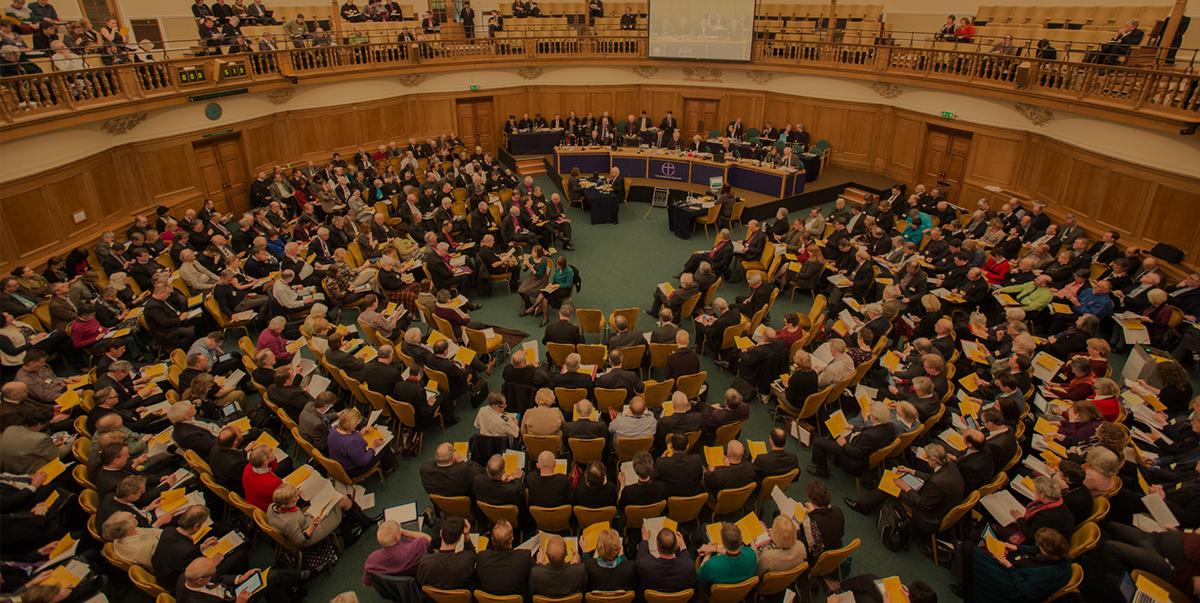
General Synod November 2021 - Mixed Ecology
General Synod Elections 2021
We are delighted to announce that this diocese’s representatives on General Synod for the next five-years (2021-2026) are:
|
House of Clergy representatives:
Clergy Results | PDF Election of Proctors in Convocation | PDF General Synod Representatives: When the Revd Leslie Siu left the diocese, his seat at General Synod fell vacant. The rules say that we can ask the two candidates unelected in 2021 whether they wish to stand now. Both the Ven. Sally Gaze and the Revd John Thackray expressed their interest and Civica (who ran the 2021 election) re-ran the count using 2021’s votes: the result is that the Ven. Sally Gaze is elected. Clergy Results | PDF Election of Proctors in Convocation | PDF Results | PDF
|
House of Laity representatives:
Laity Results | PDF |
Further information
General Synod Elections 2021 | The Church of England | weblink
General Synod is the legislative body of the Church of England, it agrees the national budget for the Church of England and debates a wide range of public and social issues from the perspective of a faith organisation.
Becoming a General Synod representative is an opportunity to represent the concerns of your community and your diocese at a national level. It is a time to pray together, think together and make decisions about the future of the Church of England together. It is an opportunity for you to raise issues and contribute to debates on the life of the church regarding topics such as poverty, education and climate change.
This is a voluntary role although your expenses are paid for by the diocese, and you will need to be happy using email and reading the considerable amount of documentation involved in the General Synod meetings. As part of the role you are also offered the opportunity to report back on proceedings at our Diocesan Synod.
Each diocese is allocated a number of seats in the Houses of Clergy and Laity, our diocese is entitled to three clergy and three lay representatives, each elected for five years. All beneficed, licensed and PTO clergy are eligible to stand for election, while to be elected to the House of Laity, a person must be a communicant member of the Church of England, at least 18 years old and have their name on the church electoral roll in a parish in the diocese. All clergy in a diocese (other than PTO, unless they are on deanery synod) may vote for clergy candidates. Lay members of deanery synods may vote for lay candidates.
The General Synod is the national assembly of the Church of England, commonly referred to as the Church’s Parliament. It considers and approves legislation affecting the whole of the Church of England, authorises new forms of worship, debates matters of religious and public interest, and approves the annual budget for the work of the Church at national level.
It came into being in 1970 under the Synodical Government Measure 1969, replacing an earlier body known as the Church Assembly.
Further information can be found at: www.churchofengland.org.
General Synod Report July 2020 | PDF
General Synod Report November 2020 | PDF
General Synod Report February 2021 | PDF
General Synod Report April 2021 | PDF
General Synod Report July 2021 | PDF
General Synod Report November 2021 | PDF
General Synod Report February 2022 | PDF
General Synod Report July 2022 | PDF
General Synod Report February 2023 | PDF
General Synod Report July 2023 | PDF
 Follow the General synod live on Twitter here.